Beta Amylase for Whisky and Spirits Distilling
For whisky, grain-spirit and industrial alcohol plants: beta amylase that builds fermentable maltose in the mash when the malt's own enzymes fall short. Quoted per order for distilleries and resellers.
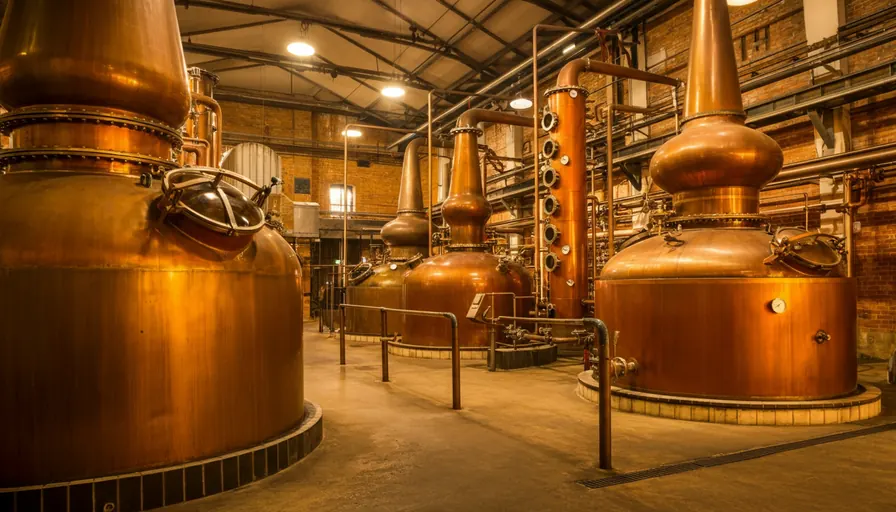
Every part of the grain's starch that is not converted in the mash leaves the plant in the spent wash instead of the spirit receiver, so saccharification decides how much spirit you get per tonne of grain. Malt whisky mashes carry the malt's own beta amylase; grain whisky and neutral spirit made mostly from wheat, corn or unmalted barley carry much less, and that is where an added beta amylase earns its cost.
This page is written for distillery buyers and for the distributors who supply them: where beta amylase fits next to alpha-amylase and glucoamylase, what to trial, and what to send for a quote. Our grades are active at pH 4.5–6.5 and 45–65°C, the range given in the specification table below.
For distillery procurement teams, beta amylase for spirits is evaluated on declared activity, temperature stability across the saccharification hold, compatibility with alpha amylase and glucoamylase in combined enzyme dosing, and food-grade documentation for potable spirits production. COA, TDS, HALAL, and KOSHER documents are available per lot. MOQ 25 kg.
Maltose Route or Glucose Route: Where Beta Amylase Fits in an Alcohol Plant
Yeast cannot ferment starch as it is: complex carbohydrates have to be broken down to simple sugars before they enter its metabolism. Starch is hydrolysed outside the cell by amylases, and disaccharides such as maltose are split into single sugars before they are used. In industrial alcohol production the standard route liquefies corn starch with alpha-amylase and saccharifies it with glucoamylase to glucose, which the yeast then ferments. Beta amylase follows the other route and builds maltose, so in grain spirit it supplements malt enzymes or glucoamylase rather than replacing the main saccharifying enzyme of an industrial alcohol plant. The sugar mix also shapes the fermenter: when glucose and other sugars are present together, microbes use the glucose first and turn to the others afterwards. At high glucose levels, brewer's yeast ferments to ethanol even when oxygen is present. So decide first whether your mash should be maltose-led, as in malt whisky and grain spirit, or glucose-led, as in industrial alcohol, and then which enzyme fills the gap your malt leaves.
Malt Whisky Mashing Enzyme Supplementation
In Scotch single malt production, traditional infusion mashing at 63–65°C for 60–90 minutes relies on malt endogenous enzymes. If malt lot enzyme activity is variable or diastatic power is below specification (typically <200 °Lintner is a risk threshold), exogenous beta amylase at 200–500 g/t grist is added at mash-in to ensure consistent wash fermentability. This prevents under-saccharification that produces high-gravity wash with residual starch — a problem that can cause fermentation stalls and reduce spirit yield per tonne of malt.
Grain Whisky and Continuous Distilling
Grain distilleries using continuous cooker and fermentation systems process 80–95% unmalted grain (wheat or corn) with 5–20% malt as the enzyme source. When production volume increases or malt prices spike, increasing the unmalted grain proportion becomes economically attractive — but dilutes enzyme activity per tonne. Exogenous beta amylase at 1.0–2.0 kg/t grain grist, combined with alpha amylase, maintains wash fermentability at target levels (75–82% apparent attenuation) regardless of malt percentage in the grist, enabling grain ratio optimisation without yield sacrifice.
American Whiskey and Bourbon Mash Bills
Bourbon and American whiskey production from corn-heavy mash bills (51–90% corn, plus malted barley and rye) relies on barley malt enzymes for starch conversion. In industrial bourbon production where distillery scale requires consistent mash performance, exogenous beta amylase at 300–800 g/t grist ensures that variability in malt lot enzyme activity does not translate into variability in wash fermentability. This is particularly important in winter production when lower mash temperatures can reduce endogenous enzyme activity below the target conversion level.
Rum and Neutral Spirit from Molasses-Starch Blends
Some rum and neutral spirit facilities use starch-based feedstocks (cassava, corn) blended with cane molasses. The starch fraction requires enzymatic liquefaction and saccharification before fermentation. Beta amylase at 0.8–2.0 kg/t starch, combined with alpha amylase for liquefaction and glucoamylase if high glucose is needed, enables complete conversion of the starch fraction alongside the fermentable sugars contributed by the molasses. This blended substrate approach improves raw material flexibility and total fermentable yield per batch.
| Parameter | Value |
| Activity range | 50,000 – 150,000 U/g (multiple grades) |
| Optimal pH | 4.5 – 6.5 (distilling mash range) |
| Optimal temperature | 45°C – 65°C |
| Form | White to light yellow powder |
| Shelf life | 12 months (sealed, cool, dry place) |
| Packaging | 25 kg fiber drums |
Frequently Asked Questions
How much beta amylase should I add for grain whisky production?
For grain whisky and continuous distilling with 80–95% unmalted grain, exogenous beta amylase at 1.0–2.0 kg per tonne of total grain grist is the typical range, combined with alpha amylase for liquefaction. For malt whisky supplementation where malt provides baseline enzyme activity but is below specification, 200–500 g/t grist is usually sufficient. American bourbon and rye whiskey production from partial malt bills typically requires 300–800 g/t. Confirm dosage through wash fermentability measurement (apparent attenuation limit) against a control mash before committing to plant-scale enzyme rates.
Does beta amylase affect whisky flavour or spirit character?
Beta amylase is a protein that is denatured during fermentation and distillation and does not carry through into the distillate. Its only effect on spirit character is indirect: by improving saccharification completeness, it ensures higher wash fermentability and more consistent fermentation performance, which produces cleaner, more consistent spirit. Under-saccharification (too little enzyme) can cause inconsistent fermentation, yeast stress, and off-flavour production. Exogenous beta amylase, used at the correct dosage, does not introduce any detectable flavour or quality difference compared to well-saccharified malt-enzyme-only mashes.
Can beta amylase be combined with glucoamylase in distilling?
Yes. Beta amylase and glucoamylase have complementary and additive effects on starch saccharification. Beta amylase produces maltose from starch chain ends; glucoamylase (EC 3.2.1.3) releases glucose from the same ends and can also bypass α-1,6 branch points. In combination, they produce a higher-fermentability wort with more complete conversion of both linear and branched starch. This combination is common in grain spirit production seeking maximum spirit yield per tonne of grain. The two enzymes are compatible in the mash and can be dosed simultaneously at mash conversion temperature.
What food-grade documentation is available for distilling use?
Our beta amylase for whisky and spirits production is supplied with food-grade documentation appropriate for potable spirit manufacture, including COA (activity, moisture, microbial limits), TDS (dosage, conditions, storage), HALAL certificate, and KOSHER certificate for qualifying orders. For distilleries under BRC, FSSC 22000, or SWA (Scotch Whisky Association) raw material approval programmes, our ISO 9001 documentation and allergen statements are available. Pre-shipment samples for in-house QC verification can be arranged on request.
Request Beta Amylase Pricing for Your Distillery
Provide your application and required volume. Receive a free sample, COA, and pricing within 24 hours.
Request a Quote